
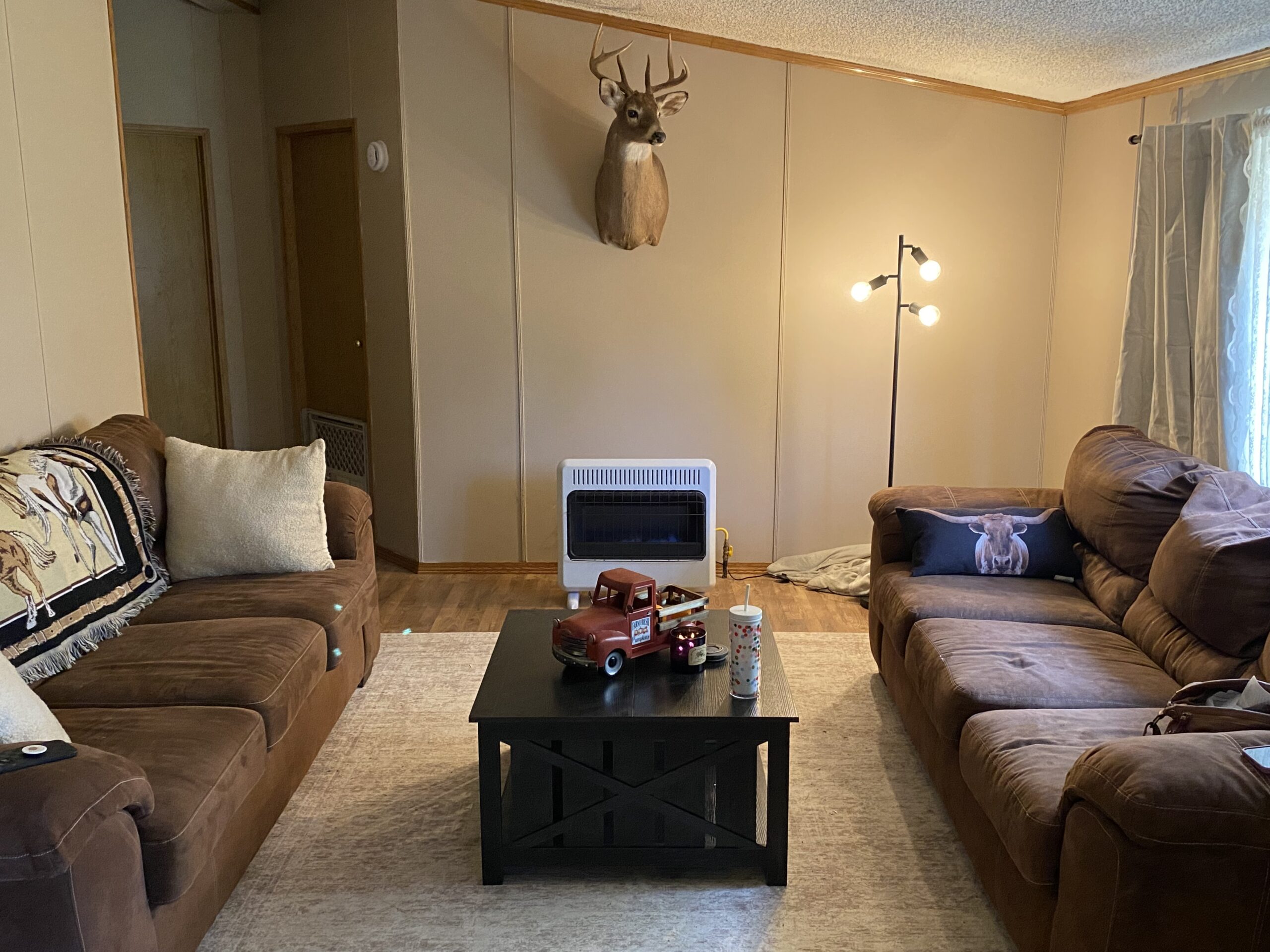
When temperatures drop and the wind picks up, most people rely solely on their furnace to stay warm.
But what happens when the power goes out or the furnace fails in the middle of winter? That’s where Natural Gas Space Heaters come in, offering an efficient, dependable source of heat that doesn’t depend on electricity.
After installing two different units in my own home, both from Mr. Heater, I can confidently say these small systems are worth their weight in comfort.
They’ve become my go-to for supplemental heat and peace of mind during outages.


Why Consider a Natural Gas Space Heater?
Natural gas is one of the most stable and affordable heating fuels available. Unlike electric space heaters, natural gas space heaters operate even when the power is out.
That makes them ideal for preparedness-minded homeowners who want to maintain warmth during winter storms or grid failures.
These heaters also supplement your furnace, allowing you to keep the thermostat lower while maintaining comfort in your most frequently used rooms.
Whether you live in a modern, well-insulated home or an older, draftier one, there’s a ventless model to fit your situation.
Blue Flame vs. Radiant — Which One Fits Your Home?
When shopping for natural gas space heaters ventless, you’ll see two main styles: blue flame and radiant. The difference lies in how they transfer heat.
| Type | Best For | How It Heats | Visual Indicator |
| Blue Flame | Newer, insulated rooms | Heats the air (convection) | Steady blue flame behind a grill |
| Radiant | Older, drafty rooms | Heats people and objects directly (infrared) | Glowing red ceramic panels |
The blue flame model works like a miniature furnace, gradually warming the air in a closed space. The radiant model feels more like a campfire — you feel the warmth immediately on your skin.

Both do the job well, but choosing the right one depends on how airtight your space is. In my setup, I installed the radiant heater in our older, draft-prone living room, and a blue flame heater in a newer, better-insulated area of the house. Both were ventless natural gas heaters with built-in thermostats.
Installing a Ventless Gas Heater
Installing one of these heaters isn’t difficult, but you’ll need a few extra parts not included in the box:
- ⅜” 90-degree gas valve
- Pipe dope or thread sealant tape rated for natural gas
- 36” flexible gas line (look for kits labeled for “gas appliances”)
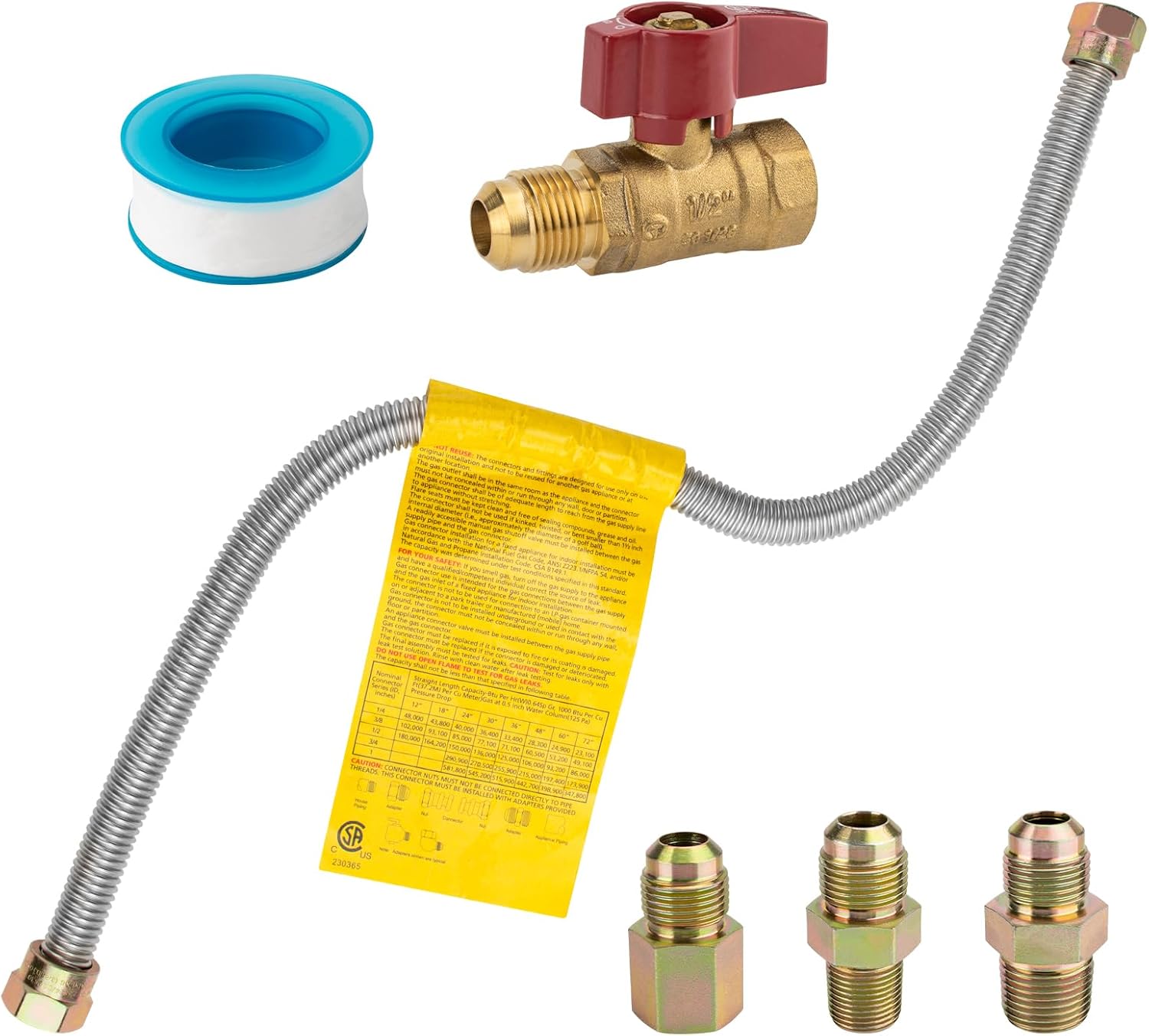
Quickly connect your natural gas heater with this universal hook-up kit—complete with fittings, shut-off valve, and gas seal tape for a secure, leak-free setup.
Most ventless gas heaters with a thermostat come preset for propane, so if you’re running natural gas, flip the selector switch on the back before installation. That one detail trips up more people than you’d think.
I mounted one heater inside a converted fireplace hearth; it looks clean and keeps the unit out of the way. After connecting the line and checking for leaks with a soapy water solution, it was ready to fire up.


Pro tip: The ignitor uses a single AAA battery. Replace it with a lithium AAA for longer life, especially if your heater sits idle for most of the year.

How the Thermostat Works
Each heater features a simple dial thermostat. Once you set your desired level, the heater cycles automatically, shutting off when the room reaches the target temperature and reigniting when it cools down.
This automatic cycling keeps fuel use efficient and prevents overheating. On particularly cold nights, I noticed the radiant model cycling every ~30 minutes, maintaining a steady room temperature of around 72°F without any adjustments, and my furnace was off.
Real-World Heating Results from Two Installs
Post install, here’s what I found:
The radiant heater comfortably warmed a medium-sized living room at setting 2, maintaining around 71°F even when outside temps dipped into the 30s.
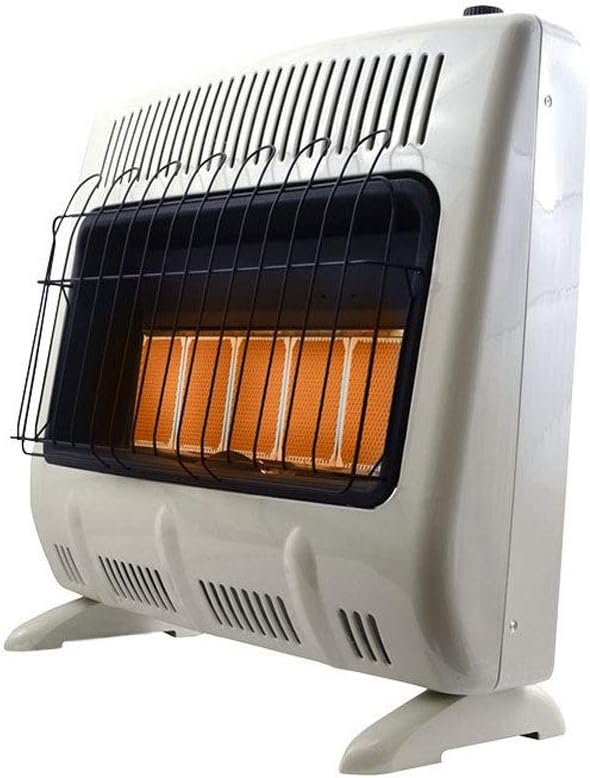
Stay warm through winter with this radiant dual-fuel heater—efficiently heating up to 1,000 sq. ft. using propane or natural gas with built-in thermostat and safety shutoff.
The blue flame heater, mounted in a 1,600 sq. ft. modular home, raised the ambient temperature from 68°F to 71°F within an hour.

Heat up to 1,000 sq. ft. safely and efficiently—this dual-fuel blue flame heater runs on propane or natural gas, offering reliable warmth with built-in thermostat and safety sensors.
The heat feels natural, not dry like forced air, and the quiet operation is a significant advantage over electric space heaters that buzz constantly. For overnight use, the built-in thermostat maintains a steady temperature without intervention.
Where Can I Buy Natural Gas Space Heaters?
You don’t need to look far. Most major home-improvement stores stock these units year-round:
- Home Depot – Large selection of ventless gas wall heaters and accessories
- Lowe’s – Often carries Mr. Heater and ProCom models
- Rural King – Great option for rural homeowners or off-grid setups
- Tractor Supply – Reliable source for both natural gas and propane configurations
- Online retailers like Amazon also offer reasonable pricing, but local pickup makes returns or exchanging fittings easier.
Why Natural Gas Heaters Belong in Every Homeowner’s Winter Plan
When the power goes out in January, you’ll be glad you have an independent heat source. Natural gas space heaters don’t rely on electricity; instead, they require a standing pilot and a reliable gas supply.
For anyone living in colder climates, adding one of these heaters isn’t just about comfort; it’s about resilience. Combined with other off-grid essentials, such as lanterns, water storage, and a generator, a natural gas heater ensures your family stays warm and safe, regardless of what’s happening outside.
Final Thoughts
Whether you’re looking to supplement your furnace, cut heating costs, or prepare for a power outage, Natural Gas Space Heaters are a smart investment in year-round comfort and peace of mind.
Natural Gas Space Heaters FAQ
Are ventless gas heaters safe for home use?
Yes, when installed correctly and used in a room with proper airflow. Modern units include oxygen-depletion sensors that automatically shut off the flame when oxygen levels drop too low.
Can ventless heaters replace a furnace?
Not entirely. They’re best used as supplemental or backup heat sources, not full-time replacements for central systems.
What size heater do I need for my room?
A general rule is 10,000 BTU for every 300 sq. ft. of space, but always check the manufacturer’s sizing chart for accuracy.
Stay tuned to The Gear Bunker and be a part of this all veteran-owned website. And be sure to subscribe to our Facebook, Instagram, and YouTube channels. Sign up to be notified on YouTube ensuring you’ll know immediately when new content is uploaded.
Check out our new Affiliate Partner Page.
Visit our Amazon Storefront for more related items.

Leave a Reply