

The Marine Corps Jungle Warfare Training Center in Okinawa Japan had to be one of my favorite training deployments. Learning how to operate and survive in a jungle environment is vastly different from a desert or woodland environment.
I remember attending one of our first training sessions at the Northern Training Area (NTA). One of the first lessons is that there are threats native to the jungle that you must be aware of.
Sitting on the table in front of the class were several glass jars containing various snakes (mostly venomous). As the glass jars were passed around, the instructors said these are some of the threats to be aware of as we conduct our training. That started to put things into perspective. You are NOT the king of the jungle.
Jungle Survival Kit List
- Grayl Water Bottle
- Nalgene Water Bottle
- MSR Backcountry Water Filter (for Nalgene)
- Magnesium fire block
- Vaseline coated Cotton balls (kept in a ziploc bag)
- Jungle Machete
- Fixed Blade Knife (standard issue is the Ontario Knife Company OKC3S Bayonet)
- Folding Saw
- Field Tarp (standard issue is the USMC Woodland MARPAT Tarp)
It’s pretty cool to see Marines at the Jungle Warfare Training Center carrying Grayl water bottles now. Back when I went through, it was all canteens, metal canteen cups (for boiling the water), and those nasty purification tabs that left the water tasting like a swimming pool.


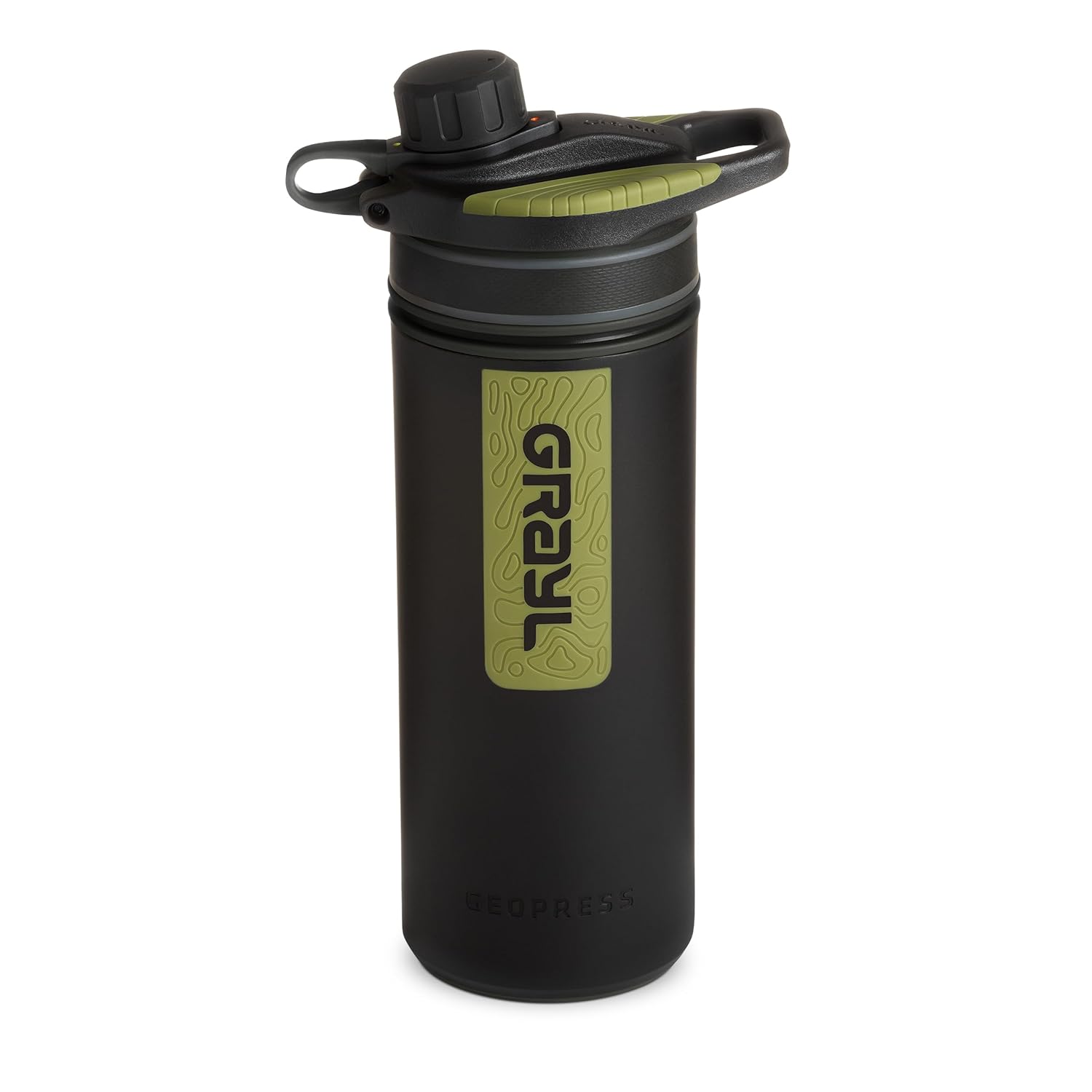
Press, drink, move — the GRAYL GeoPress gives you clean water in seconds, built for the wild and made to last.
Lessons Learned During Jungle Survival Training
During jungle warfare training, navigation becomes exponentially tougher when working under a double-canopy jungle. GPS units will not be able to locate satellites due to the canopy which means you must be confident in using a map and compass.
A machete or kukri becomes more useful than smaller belt knives to allow you to cut through the thick vegetation, dispatch snakes for food, and for other various survival tasks.
As silly as it seems, having an emergency whistle on your person can be a lifesaver (We had OD green tactical whistles). During a nighttime patrol, we had one of our guys step out onto the lower canopy thinking it was the ground, and fell quite a ways. The only way we could locate him was to follow the sound he was making with his whistle.
And speaking of nighttime ops in the jungle; having a good pair of leather gloves is a must. Some of the plants and vegetation have extremely sharp edges on them as the guy who fell came to realize very quickly as he was trying to grab onto things to stop his fall.
Another stupid piece of Marine Corps gear to ditch during jungle warfare training is the boot blouse. All those accomplish is holding water inside your pant legs. Depending on your unit’s SOP you may or may not be able to go without these.
Lastly, we learned quickly how important it was to have multiple pairs of socks to change into. If you don’t attempt to keep your feet dry and taken care of, consider yourself a casualty of the jungle.
Understanding the Jungle Environment
The jungle environment presents a unique set of challenges that are vastly different from those in desert or woodland terrains. One of the first things to grasp is the sheer density and diversity of the jungle ecosystem.
Unlike more open environments, jungles are characterized by dense vegetation, high humidity, and significant rainfall, creating a setting that can be both physically demanding and mentally taxing. The thick canopy often results in limited visibility, while the undergrowth can be a maze of obstacles.
Temperature variations between day and night add another layer of complexity, requiring adaptability in both gear and tactics. Additionally, the psychological aspect of operating in such an environment cannot be underestimated. The constant buzz of insects, the dampness, and the feeling of being enclosed by foliage can be disorienting and mentally exhausting.

For anyone training or venturing into the jungle, understanding these environmental factors is crucial. It’s not just about physical endurance; it’s also about developing the mental resilience to navigate and thrive in an ecosystem that is both beautiful and challenging.
This understanding forms the foundation for effective jungle warfare training, as it prepares individuals not only to survive but to operate efficiently in one of nature’s most demanding environments.
Stay tuned to The Gear Bunker and be a part of this all veteran-owned website. And be sure to subscribe to our Facebook, Instagram, and YouTube channels. Sign up to be notified on YouTube ensuring you’ll know immediately when new content is uploaded.
Check out our new Affiliate Partner Page.
Visit our Amazon Storefront for more related items.

Leave a Reply