
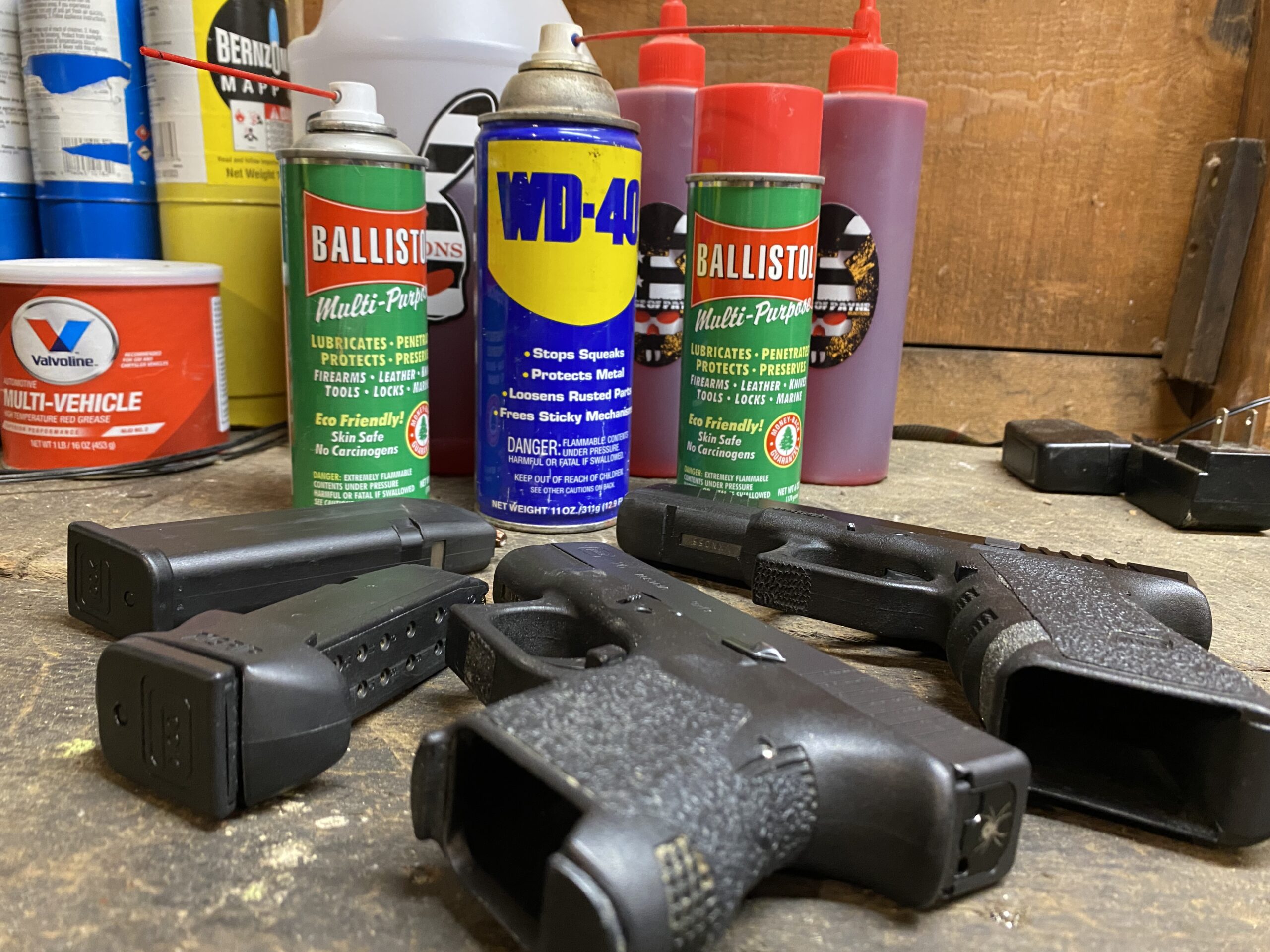
If you’ve ever cleaned guns long enough, there’s a good chance you’ve reached for a can of WD-40 at some point. Maybe it was all you had on the workbench, or maybe you figured “it works on everything else, why not my rifle?”
I get it. WD-40 has been around forever. But when it comes to firearms, where carbon, heat, and precision tolerances meet, not all oils are created equal. And that’s where Ballistol separates itself from the pack.
Let’s get into what makes these two so popular, and which one you should actually trust on your guns.
Ballistol’s Military Roots
Ballistol didn’t start out as some hobbyist’s garage experiment. It was developed in 1905 for the German Imperial Army, designed to maintain their rifles, wood stocks, and even leather gear. The name comes from “Ballistic” and “Oleum” (Latin for oil); ballistic oil. Simple. Effective. German.
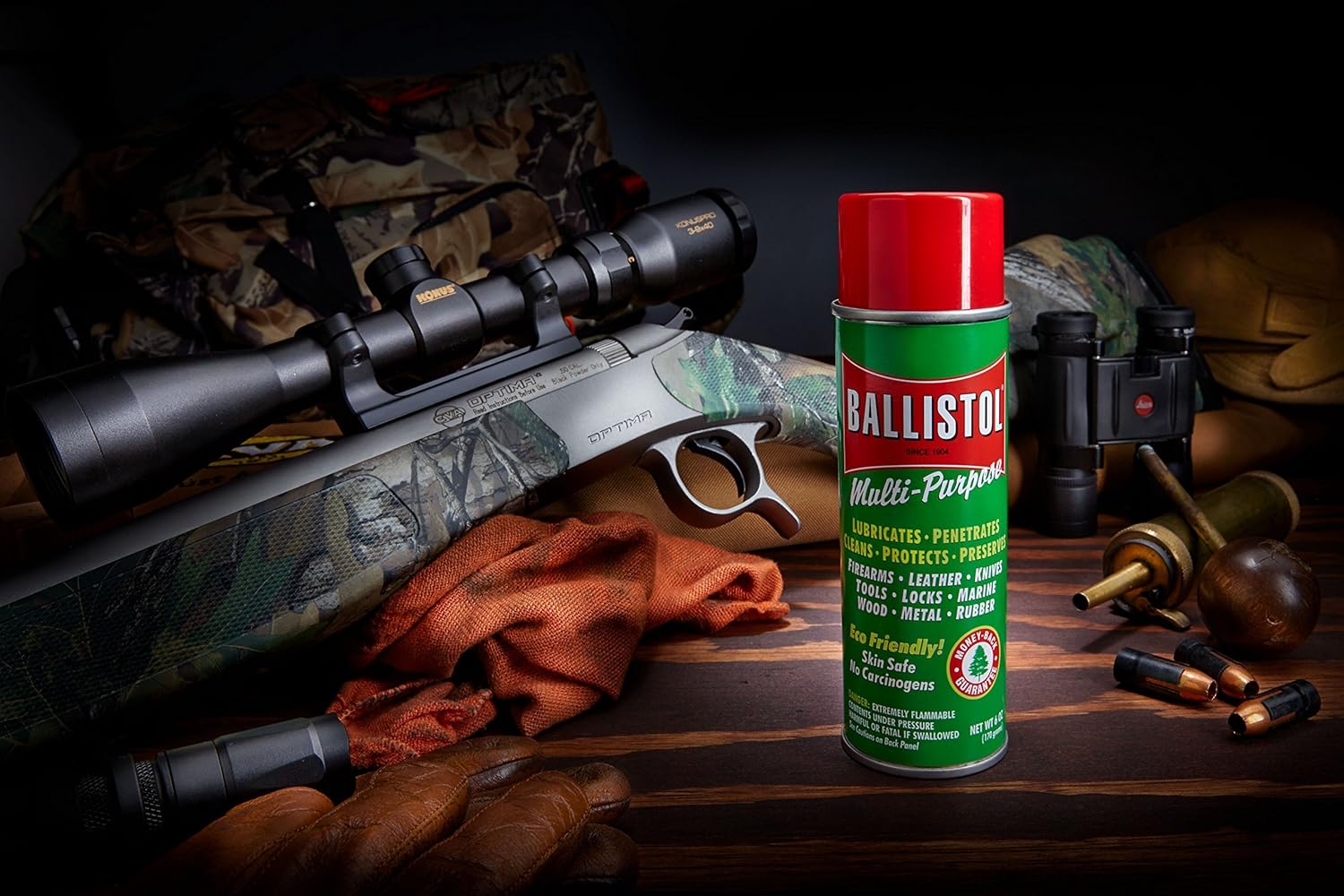
Ballistol is a legendary all-in-one gun oil that cleans, lubricates, and protects your firearms from rust, fouling, and corrosion—built for shooters who demand reliability in any condition.
It was built to do three things:
- Clean fouling and powder residue
- Lubricate moving parts
- Protect metal from rust, even in the field

What is WD-40?
WD-40 (short for Water Displacement, 40th formula) was created in the 1950s to prevent corrosion on missile parts. It wasn’t meant for guns, but it found its way into toolboxes everywhere.
It’s handy, no doubt. It loosens rusted bolts, quiets squeaky hinges, and displaces moisture like a champ. But here’s the thing: it’s not a gun oil.
WD-40’s biggest strength is also its biggest weakness. It evaporates fast. You’ll get a bit of cleaning and some moisture protection, but that protective layer doesn’t last long enough for serious firearm maintenance. If you’re cleaning a defensive handgun, that’s not something you want to gamble on.
Ballistol vs WD-40 for Firearm Maintenance
Cleaning
Ballistol: Cuts through carbon and powder residue like it was designed to (because it was). A quick spray inside the barrel and a few passes with a bore snake usually gets the job done.
WD-40: Can help break up grime in a pinch but doesn’t penetrate or lift fouling as effectively. It’s more of a surface cleaner than a solvent.
Lubrication
Ballistol: Leaves behind a thin, long-lasting film that resists rust and keeps parts running smooth without turning gummy.
WD-40: Feels slick at first but evaporates quickly, leaving the gun dry — not ideal for high-friction parts like slides or bolt carriers.
Protection
Ballistol: Stays on metal even when wet, preventing corrosion in humid conditions. I’ve seen it work just as well after a rainy range day as it does in the garage.
WD-40: Displaces water well but doesn’t provide lasting protection once it’s gone. You’ll be cleaning rust before long if that’s all you’re using.
Real-World Use: My Experience with Ballistol
I’ve been using Ballistol for years now; not just because it smells like old-school gun oil (okay, maybe a little), but because it works.
A couple of sprays inside the Glock barrel, a quick wipe on the slide and frame, and the carbon practically melts off. I’ve used it on AR bolt carriers, knives, and even to wipe down leather slings. It’s one of those products that earns its space in the range bag.

And the best part? If you accidentally get some on your hands, it won’t burn your skin or smell like a chemical factory exploded. Ballistol is biodegradable and skin-safe, which is a big plus when you’re cleaning multiple guns.
When WD-40 Still Has a Place
Now, to be fair, there are a couple of situations where WD-40 can save the day:
Freeing up a rusted or seized firearm. If you find an old rifle that hasn’t been opened in decades, WD-40 can help loosen the action before a full cleaning.
Emergency water displacement. If you accidentally dunk your firearm, WD-40 can temporarily protect it until you can strip and properly clean it.
But that’s where its usefulness ends. Once the gun’s dry, switch to something purpose-built, like Ballistol.
Final Verdict
If you’re maintaining firearms, whether that’s a Glock, AR, or granddad’s hunting rifle; Ballistol is the clear winner.
It’s built for the job, provides lasting protection, and doesn’t destroy the environment in the process.
WD-40? Keep it in the garage. It’s fine for door hinges and corroded bolts, but not for your gun safe.
In short:
Ballistol = long-term firearm care.
WD-40 = short-term fixes.
Two cans. Two very different purposes.
FAQ: Ballistol vs WD-40
Can I use Ballistol on firearms?
Yes, Ballistol is highly recommended for firearms maintenance. It is effective for cleaning, lubricating, and protecting various firearm parts. It can remove carbon, lead, and powder residues, provide smooth lubrication, and prevent rust and corrosion.
Is WD-40 suitable for use on firearms?
WD-40 is not ideal for firearms maintenance. While it can help displace moisture and loosen rusted parts, it evaporates too quickly to provide adequate lubrication and protection. It is best used for quick fixes rather than long-term maintenance.
What materials can Ballistol be used on?
Ballistol can be used on various materials, including metals, wood, leather, rubber, and skin. Its versatility makes it suitable for various applications beyond firearms, such as maintaining leather goods and treating wood surfaces.
What materials can WD-40 be used on?
WD-40 is effective for lubricating, cleaning, and protecting metal surfaces against rust. It can also be used on rubber and some plastics. However, due to its solvent properties, it is not recommended for use on delicate surfaces like leather or painted surfaces.
Is Ballistol biodegradable?
Yes, Ballistol is biodegradable and environmentally friendly. It breaks down naturally over time, not contributing to long-term environmental pollution. It also uses sustainable manufacturing practices and recyclable packaging.
Is WD-40 biodegradable?
No, WD-40 is not biodegradable. It contains volatile organic compounds (VOCs) that can persist in the environment and contribute to air pollution. It is not considered an eco-friendly product.
What are the main uses of Ballistol?
Ballistol is used for cleaning, lubricating, and protecting firearms, maintaining leather goods, treating wood surfaces, and general household maintenance. It is also safe for use on skin in emergency situations.
What are the main uses of WD-40?
WD-40 is commonly used in automotive, household, and industrial applications to loosen rusted parts, displace moisture, lubricate moving components, clean grime, and grease, and protect metal surfaces from rust and corrosion.
How does Ballistol perform in cold weather?
Ballistol remains effective in cold weather and does not freeze easily. It can be used in temperatures as low as -30 degrees Fahrenheit without significant performance issues, making it suitable for outdoor use in various climates.
How does WD-40 perform in cold weather?
WD-40 can become less effective in extremely cold conditions, but it does not freeze. It continues to displace moisture and provide temporary lubrication, though it may evaporate more quickly in cold environments.
Is the smell of Ballistol a concern?
The smell of Ballistol can be off-putting to some users, as it has a distinct odor similar to black licorice or anise. However, the smell dissipates relatively quickly and does not linger.
Is the smell of WD-40 a concern?
WD-40 has a recognizable chemical smell, but it is generally not considered unpleasant. The smell can linger, especially in enclosed spaces, so proper ventilation is recommended during use.
Stay tuned to The Gear Bunker and be a part of this all veteran-owned website. And be sure to subscribe to our Facebook, Instagram, and YouTube channels. Sign up to be notified on YouTube ensuring you’ll know immediately when new content is uploaded.
Check out our new Affiliate Partner Page.
Visit our Amazon Storefront for more related items.

Leave a Reply