
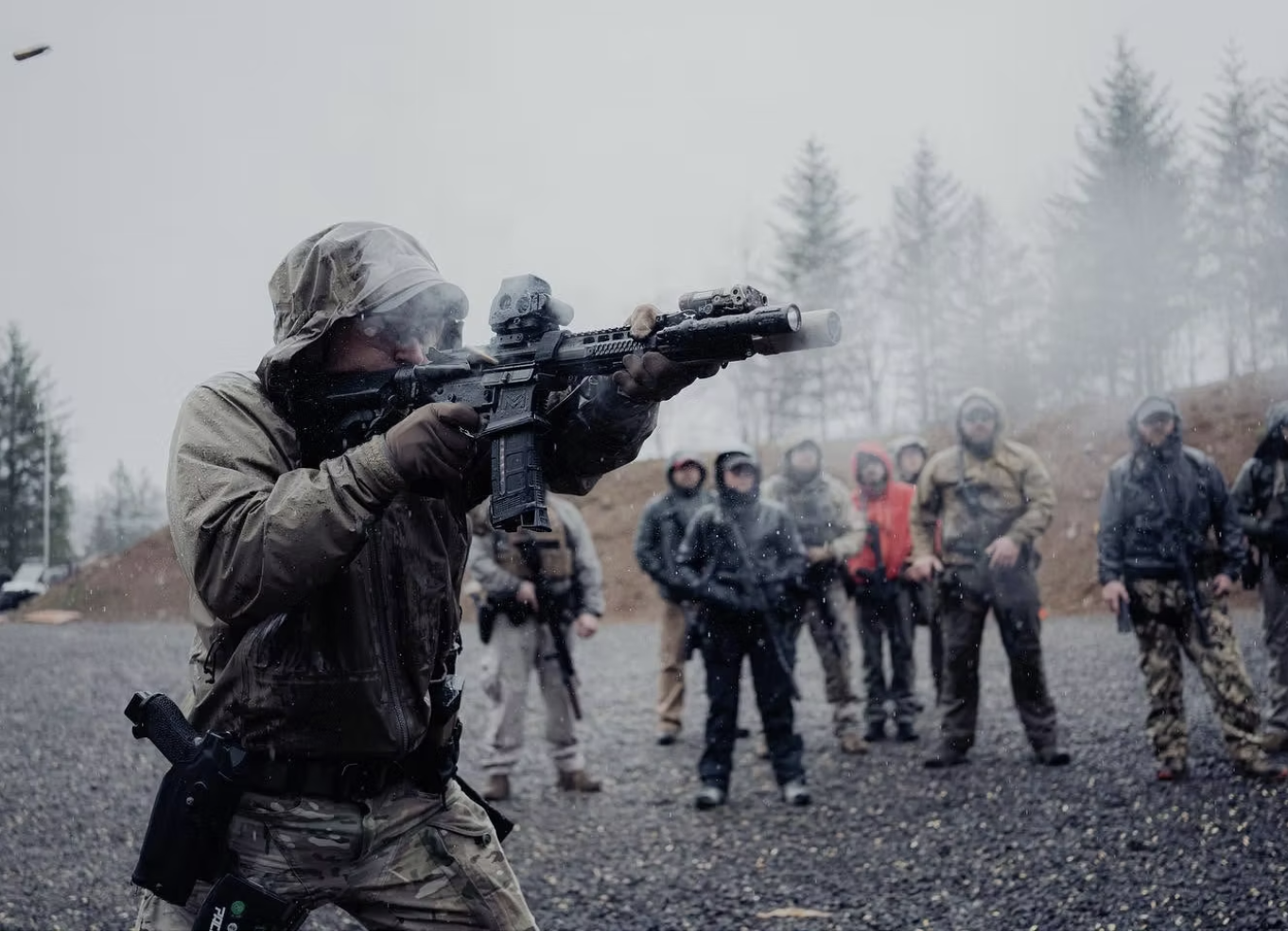
If you live in Ohio — or anywhere winter actually means something — you know the pattern. The outdoor ranges go quiet. Daylight’s gone before you get home from work. Cold hands make everything harder. Add the holidays and the general pull toward staying somewhere warm, and the rifle that saw regular use all summer hasn’t left the safe in three months.
Then April shows up and you’re on the range wondering why your draw feels slow and your groups opened up. I’ve been there. Most shooters have.
But winter doesn’t have to be the off-season. I’ve started treating it as the time to work on everything that gets pushed aside when the weather’s good and I’d rather be sending rounds. You may not shoot as much. That doesn’t mean you stop training.
Shooting Is a Perishable Skill
Grip, presentation, trigger control, reloads, manipulations, positional work — all of it runs on repetitions. Stop feeding them and things get sloppy. Five months off is plenty of time to lose ground you spent all summer earning.
The good news: most of those skills don’t require ammunition. That’s the biggest shift I’ve made — I stopped measuring winter training by rounds fired and started measuring it by what I actually worked on. You can accomplish a lot without firing a shot.
Dry Fire Is the Foundation
Dry fire is nothing new, but there’s a real difference between structured practice and standing in front of a light switch running ten draws because you’re bored. I’ve done both. The second one beats nothing, but if you’re going to spend the time, have a reason for it.
Maybe it’s a cleaner grip out of the holster. Maybe your presentation’s sloppy. Maybe you keep losing time on reloads, or the rifle-to-pistol transition. Pick one thing and work it.
Sessions don’t need to run an hour. Fifteen or twenty deliberate minutes a few times a week adds up fast over four or five months. What matters is mechanics — because bad reps count too. Rush your draws to beat a timer or grind a movement in wrong, and you’re just reinforcing what you’ll eventually have to fix. Slow down, understand the goal, then add speed.
And it goes without saying: set up a safe dry-fire area. Unload the gun, clear all live ammo from the space, verify the firearm’s condition, and use a real backstop. When the session’s done, it’s done — don’t bounce back and forth between dry practice and live rounds.
Audit Your Gear While You’re Not Using It
We spend a lot of time talking about gear and very little inspecting it. Winter’s the time to fix that.
Pull your primary rifle and actually look at it — optic mount, sling, bolt and carrier, lights, switches, batteries. Do the same with your handgun. If you carry, go through your holster and belt for cracked hardware, loose screws, worn attachment points, and beat-up mags.
Then look past the guns. Medical gear expires. Batteries die. Tourniquets get worn out. Adhesives break down. Stuff migrates between bags and doesn’t always come back — I’ve opened a range bag and found things missing I’d have sworn were in there. Winter gives you time to reset all of it, and to get your support gear organized so it’s actually there when you reach for it.
Train the Things That Aren’t Shooting
This might be the most overlooked part of an off-season plan. Being good with a gun is useful, but the trigger press is one skill among many.
How good are you with a tourniquet? Can you put one on yourself, with either hand? When did you last actually run the medical gear you carry? If you’ve never had formal instruction, a Stop the Bleed class is cheap, short, and widely available. Can you work a handheld light while manipulating your pistol, and identify a target before you point a gun at it?
Medical, low-light, physical fitness, land nav, comms, gear setup, observation, vehicle prep, basic emergency planning — none of it needs a range, and all of it makes you more capable. Winter’s a good time to find the weak spots you’ve been avoiding and start closing them.
Get Smarter
There’s more legitimate training material online now than ever — and a mountain of garbage alongside it. Be selective.
Take a course. Revisit material from an instructor you’ve trained with. Read something that actually teaches you something. I’ve worked with Achilles Heel Tactical, and what I like about their on-demand courses is the structure they add to the work you’re already doing at home: instead of randomly running manipulations, you’ve got a framework and a reason behind the reps. Plenty of other good instructors are doing the same thing.
Just be clear on what instruction does. It gives you information; practice builds the skill. Use winter to get the information, drill it in dry fire, and validate it live when you get the chance.
Don’t Completely Avoid the Cold
Here’s the other side of it: sometimes you should go outside.
If you own guns because you might actually need them, there’s no guarantee that day is 72 and sunny. Cold changes everything. Heavy clothing fouls your draw. Gloves change your manipulations. Cold fingers lose dexterity. Batteries fade, lubricants behave differently, your glasses fog, and your body moves differently under layers. Even getting to a concealed handgun underneath a winter coat deserves some thought.
You don’t need to freeze on a firing line every Saturday, but a little time with your gear in bad weather surfaces problems you’ll never find on a comfortable June afternoon. Just don’t confuse suffering with training. Standing outside cold for three hours isn’t automatically productive — have an objective, hit it, and go get warm.
Make Your Limited Range Time Count
Ohio winters aren’t a total live-fire blackout. You’ll get the random 50-degree Saturday in January, and indoor ranges exist when you need to confirm something.
When you get one of those windows, don’t waste it. You don’t need 500 rounds — 50 or 100 fired with a purpose will tell you more than a few hundred of blasting. Confirm your zero. Shoot groups. Check your draw and transitions. Run drills that give you measurable results. Then take what you learned home and let it steer the next few weeks of dry practice. That turns a pile of random range trips into an actual training cycle.
Don’t Forget the Shooter
There’s one piece of equipment that gets ignored more than any other: you.
If your conditioning is bad, winter’s a good time to fix it. You don’t need to become a competitive athlete, but strength, mobility, cardio, and body composition all shape what you can do. Move fast into an awkward shooting position and back up a few times. Carry a loaded rifle, armor, ammo, and med gear any real distance. Sprint 50 yards and try to hold a rifle steady. Fitness gets relevant quick — and four or five months is enough to make a real difference. If range time drops this winter, redirect some of it toward yourself.
Set a Goal for Spring
The easiest way to waste an off-season is to train with nothing to train for. Give yourself a target: a pistol class in May, your first competition, a carbine course where you’re not the guy fighting his gear all weekend. It doesn’t much matter what it is — something on the calendar creates accountability and structures the winter around it.
Spring shouldn’t be when you start preparing. It should be when you find out whether the preparation worked.
There Really Isn’t an Off-Season
You might have a shooting season, especially if you depend on outdoor ranges. You don’t need a training season. There’s always something to sharpen — dry fire, medical, fitness, gear, education, low-light, emergency prep. Even an evening reorganizing your range bag and swapping dead batteries beats packing everything away in November and pretending you’ll be just as sharp in April.
You don’t have to spend all winter training like you’re prepping for selection. Just don’t stop. Do a little every week, pick something you’re bad at, keep your hands on your guns, learn something, get stronger, fix your gear. Then, when the weather breaks and everyone else heads back to knock off five months of rust, you’ll be back to actually improving.
Stay tuned to The Gear Bunker and be a part of this all veteran-owned website. And be sure to subscribe to our Facebook, Instagram, and YouTube channels. Sign up to be notified on YouTube ensuring you’ll know immediately when new content is uploaded.
Check out our new Affiliate Partner Page.
Visit our Amazon Storefront for more related items.

Leave a Reply